
✪ Journal ✪
Can 3D Printed Decorations Go Outside? An Honest UK Garden Guide
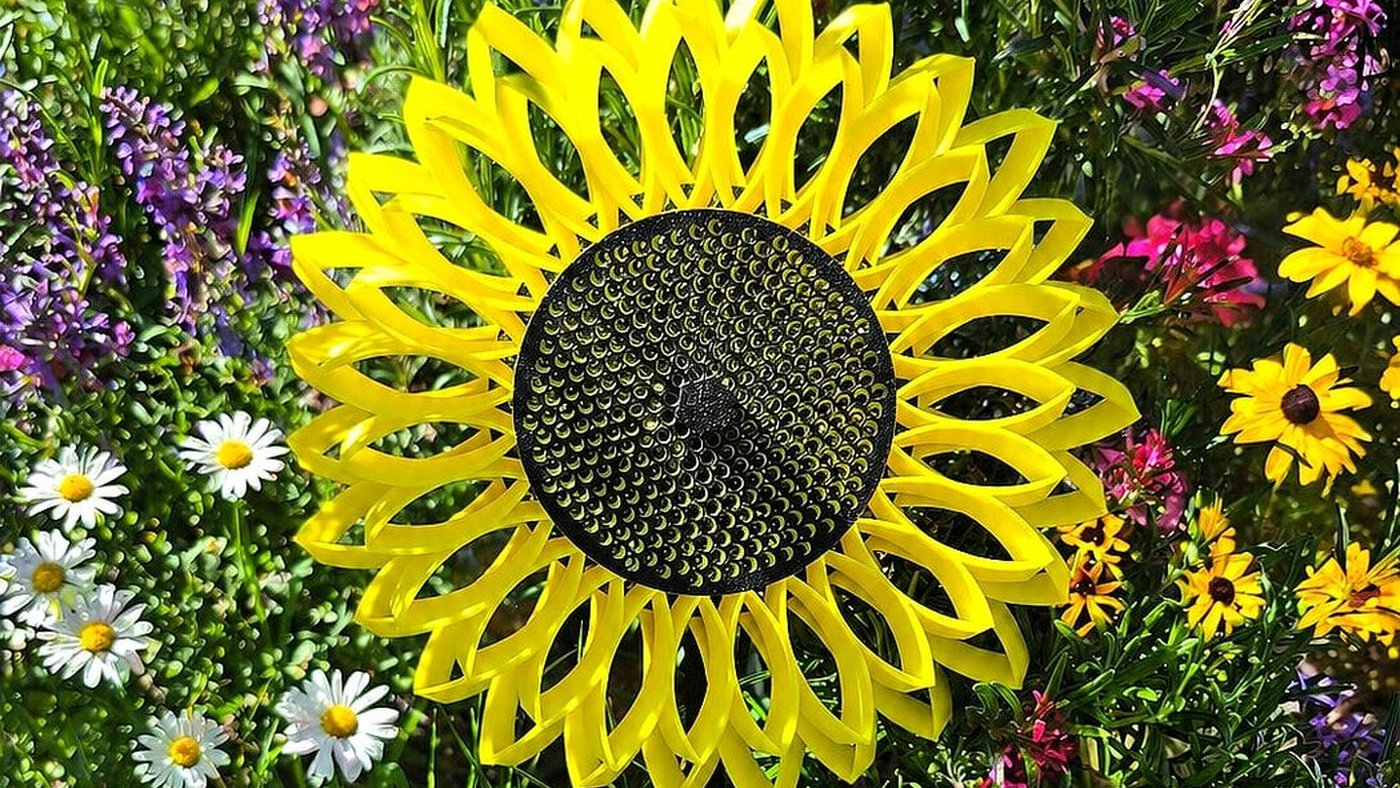
It is the question we get asked more than any other about our garden pieces: will a 3D printed decoration survive outside in Britain? The short answer is yes, comfortably, with a couple of sensible placement choices. Here is the honest, slightly longer answer.
What our garden pieces are made from
Most of our décor is printed in PLA, a plant-based biopolymer made from fermented plant starch rather than fossil fuels. It is rigid, holds fine detail beautifully, and takes colour well, which is exactly what you want for pieces like our hot air balloon wind spinner or sunflower windmill. You can read more about why we use it on our sustainability page.
Rain: not a problem
PLA does not dissolve, rot or swell in the rain. A wet British autumn will not hurt a printed piece at all. Water simply runs off it, and a rinse under the garden tap is actually the easiest way to clean one. The only caution is standing water: if a piece has cupped hollows that hold puddles for weeks, tip it out now and then so algae does not get a foothold in the texture.
Frost: fine, with one caveat
Cold does not damage PLA either. Pieces happily sit out through frost and snow. The one thing worth knowing is that plastics get slightly more brittle in deep cold, so a hard knock in January (a falling branch, an enthusiastic dog) is more likely to crack a thin part than the same knock in June. If your garden is boisterous, moving delicate pieces somewhere sheltered over winter is a nice-to-have, not a must.
Sunshine: the real consideration
Here is the honest part. Two things about sun matter:
- UV fading. Like curtains, fence paint and garden furniture cushions, printed colours slowly mellow with months of direct sunlight. Brighter pigments fade faster than darker ones. In a typical UK garden this is a gradual softening over seasons, not a sudden change, and plenty of people rather like the weathered look.
- Heat softening. PLA starts to soften at around 60°C. Open UK air never gets close, even in a heatwave, so ordinary garden placement is fine. Where you can hit those temperatures is behind glass: a south-facing conservatory shelf, a greenhouse, or a parked car in summer. Keep printed pieces out of those spots.
Where to place a piece for the longest life
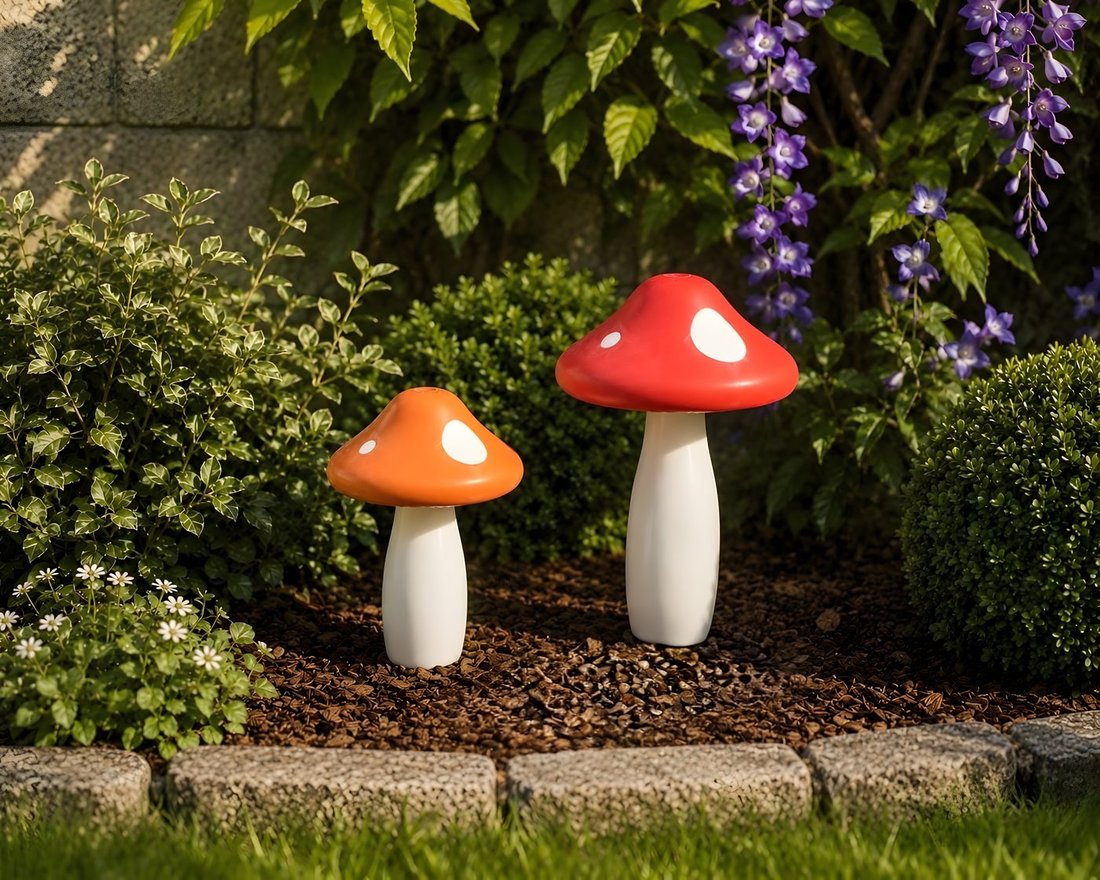
- Dappled shade or morning sun keeps colours brightest for longest.
- Avoid heat traps behind glass: conservatories, greenhouses and cold frames.
- Wind spinners and windmills actually prefer open spots, and the movement means no one side bakes in the sun all day.
- If you want a piece to stay showroom-fresh, bring it into the shed over the darkest winter months. Entirely optional.
How long will it actually last?
Structurally, years. A PLA piece in a UK garden is not going to crumble or dissolve; the realistic change over time is colour mellowing in strong sun. Our mushroom décor and fairy garden pieces spend their lives outside in test spots in our own garden, which is exactly how we know what to tell you here.
Cleaning and care
A rinse with cool or lukewarm water and a soft brush is all a garden piece ever needs. Skip the dishwasher and anything scalding: hot water is the one household hazard for PLA. If a piece picks up stubborn garden grime, a drop of washing-up liquid in cool water sorts it.
Frequently asked questions
Will rain damage a 3D printed garden decoration?
Do 3D printed decorations fade in the sun?
Can I leave a 3D printed piece outside all winter?
Where should I never put a PLA decoration?
Everything in our shop is printed and hand-finished to order in the UK.
Browse the shop